

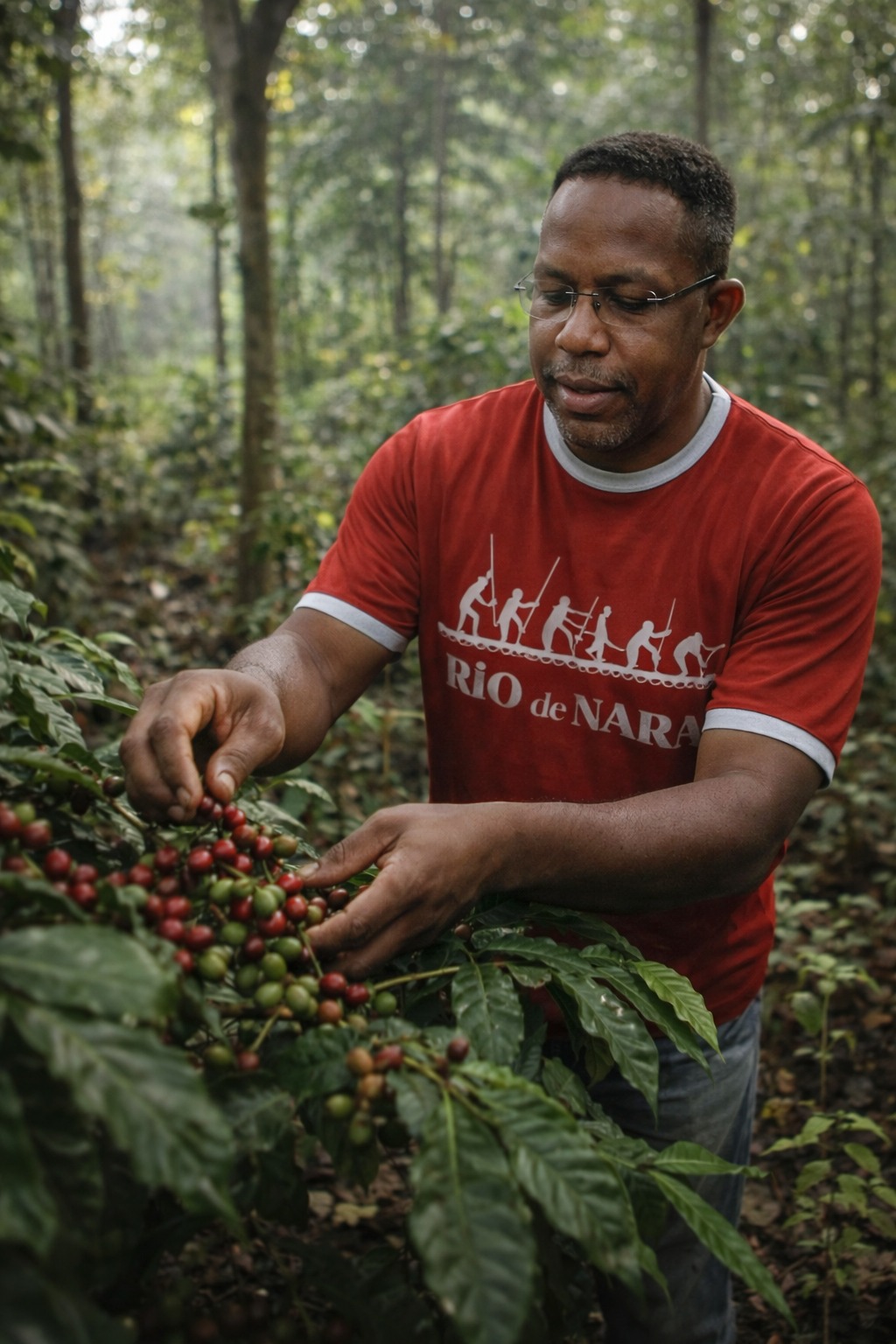
By Frans Pigome | Founder of RiO de NARA
The land of Papua is never silent. It carries memory—of forests that once provided food, rivers that sustained life, and people who grew without the need to conquer nature. When mining arrives, the land works harder. When mining ends, the land must not be abandoned.
In many places, post-mining recovery is reduced to grass and fences. Administratively, it is considered finished. In reality, life has not yet returned. Land that has been excavated requires time, patience, and continuity—not merely a surface covering to close a wound.
Agroforestry offers a more honest path. Not to conceal the land, but to restore it. Not to erase traces, but to allow the land to breathe again. In Papua, this approach is not new. Communities have long lived with mixed-garden systems: tall trees remain standing, food crops grow beneath them, and nature is cared for so it is not exhausted all at once.
Coffee is one of the most sensible crops in this context. It does not require complete land clearing. It thrives under shade. Its roots help restore soil structure, its leaves retain moisture, and its harvest provides economic value without destroying forests. Alongside coffee, other plants—local fruits, erosion-control vegetation, and protective trees—help rebuild soil that has grown tired.
For me, a Papuan who understands land as home, agroforestry is not an abstract concept. It is a responsibility. After mining, what remains is not just reports, but land that must be able to sustain life again.
Post-mining restoration must not end on paper. It must live in the gardens, in the hands of communities, and in the future of Papua’s children. Caring for land after mining is not quick work. Yet this is precisely where leadership is tested: whether one is willing to stay and care, or leave once extraction is complete.
Papua does not ask for miracles. It asks only that its land be cared for again—with patience, fairness, and responsibility.
Leave a Reply